The Forrester Wave™: AIOps Platforms, Q4 2026
WAVE REPORT
2026
The 10 Providers That Matter Most And How They Stack Up Carlos Casanova and three contributors
IN THIS RESEARCH
IN THIS RESEARCH
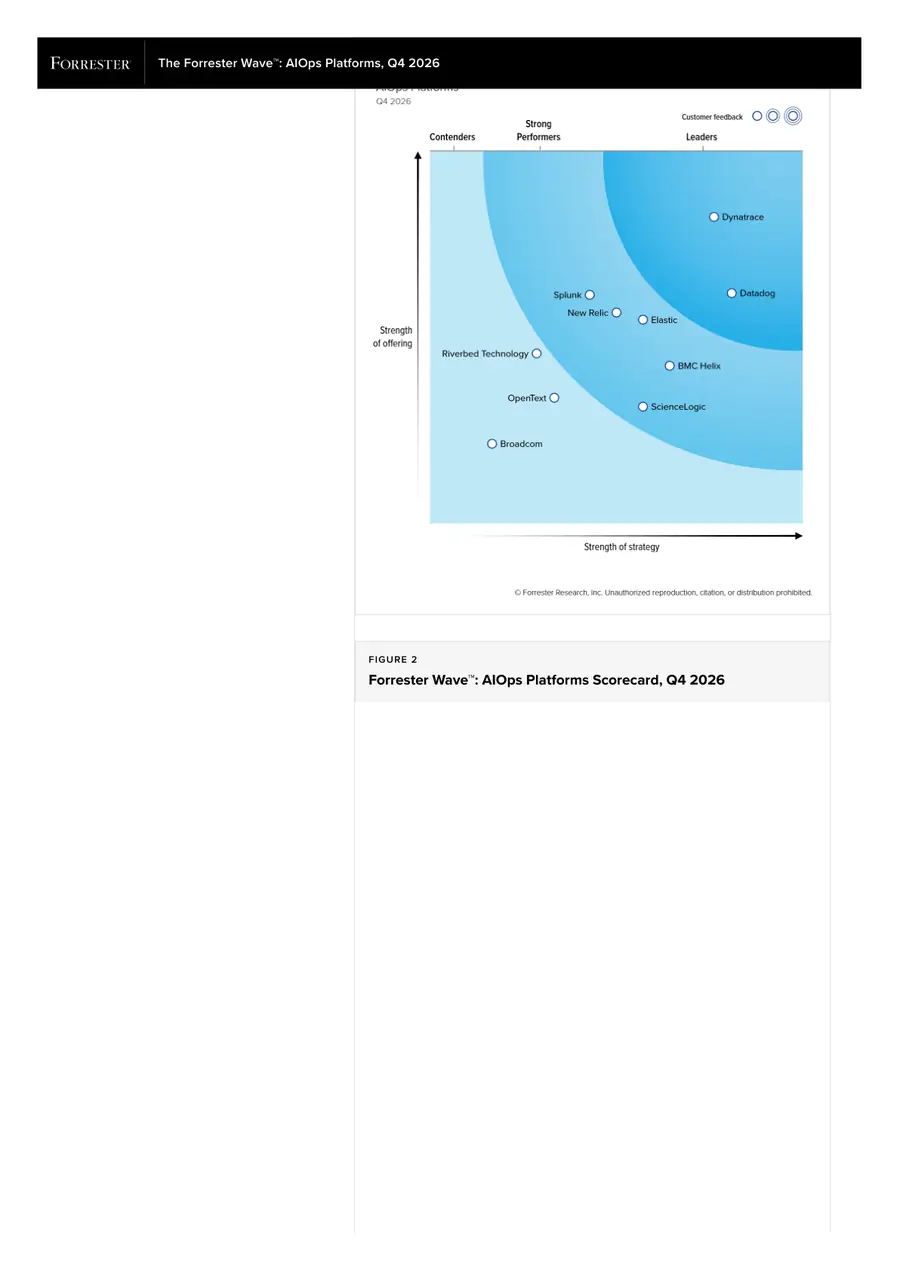
Summary AIOps Platforms: The Future Operational Intelligence Center For The Enterprise Evaluation Summary Leaders Dynatrace Datadog Strong Performers Elastic BMC Helix New Relic Splunk ScienceLogic Contenders Riverbed Technology OpenText Broadcom Vendor Offerings Evaluation Overview Vendor Inclusion Criteria Other Notable Vendors Supplemental Material The Forrester Wave Methodology Integrity Policy
Jump To
Summary
In our evaluation of AIOps platform providers, we identified the most significant ones and researched, analyzed, and scored them. This report shows how each provider measures up and helps you select the right one for your needs.
AIOps Platforms: The Future Operational Intelligence Center For The Enterprise
Monitoring is reactive and observability is investigative. AIOps builds on both by adding a causal intelligence layer that enables AI-assisted decisions. These full-stack AIOps solutions have evolved beyond just detection, diagnosis, and reactive notification. They now function more like an air traffic control tower that assesses and orchestrates decisions across thousands of interconnected systems, often autonomously. They continuously sense, reason, and respond to the changing conditions and with the growing ability to infuse business context in real time. Additionally, they transform operational data into intelligent, business- aware decisions. With every release, they expand their ability to enable organizations to anticipate risks, prevent disruptions, and optimize performance before anything affects a customer’s experience or business objectives.
AIOps full-stack platform customers using this evaluation to inform a purchase decision should consider:
The ability to prevent, not just detect incidents. Monitoring, alerting, and incident detection have all been solved and implemented across every organization. What has become increasingly differentiated is the ability to identify emerging risks, as they are developing before they impact customers and business operations. This is where causal analysis combines with predictive forecasting, business context, topology awareness, and automation to shift an IT organization’s operational posture from reactive to preventative. Evaluate its ability to autonomously recommend and initiate remediation or mitigation before services are impacted.